Success turns to disaster
On the afternoon of 14th July 1784 the Phoenix and Civil Usage returned from France fully laden with contraband. Once their cargo had been unloaded they were hauled into the Harbour and moored behind Haven House.
That smuggling run had been my greatest success, but imagine my dismay the following afternoon when two Revenue cutters and a well-armed sloop-of-war arrived in the Bay. My boats were trapped and certain to be seized, so I ordered my men to strip them of their sails and other valuable fittings.
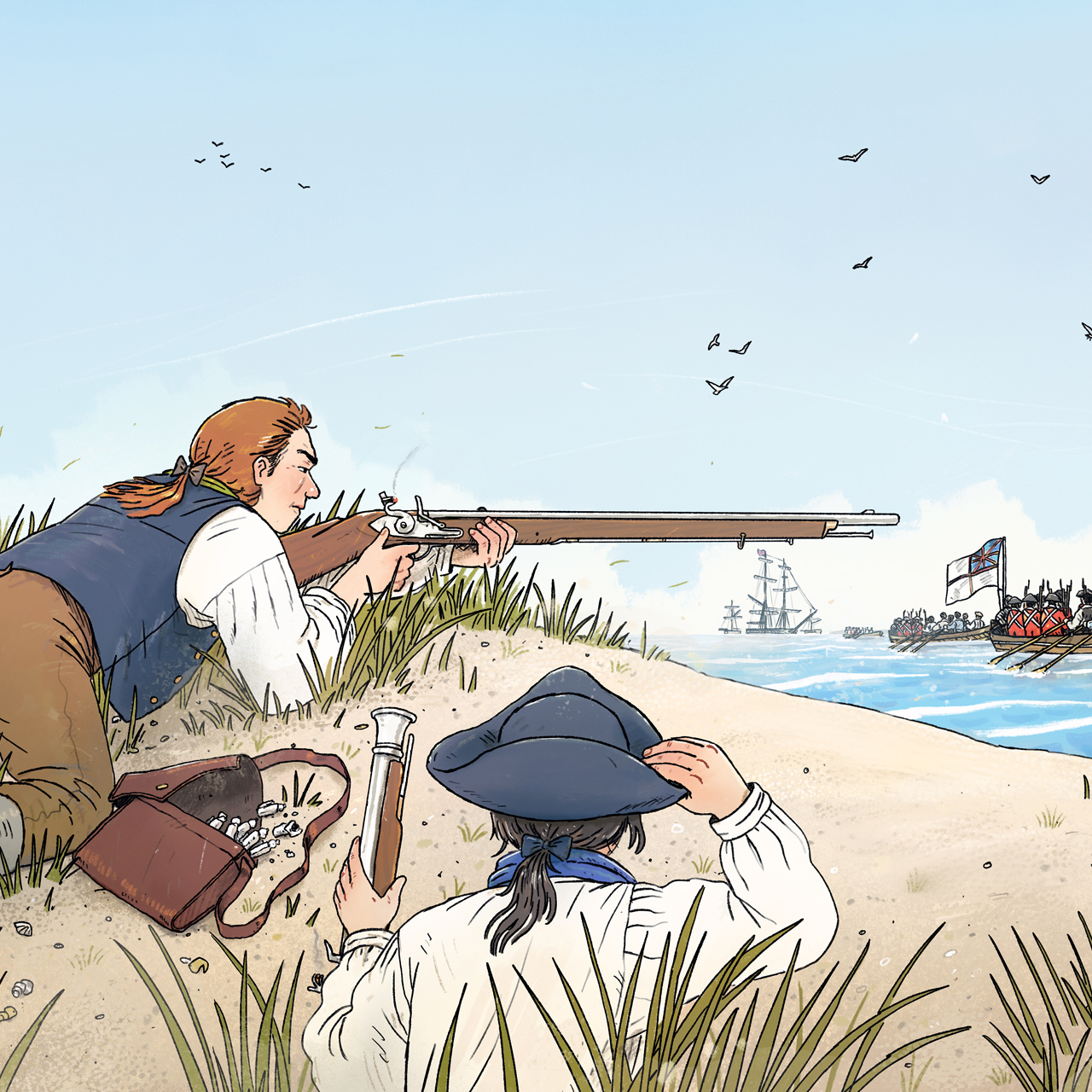
The Revenue vessels then launched six longboats, each carrying a troop of musket-armed marines. The sight of those approaching sea soldiers in their red tunics was a cause of great alarm.
My two captains, William May and William Parrott, then armed a gang of about ten men with muskets and blunderbusses and had them take cover in the dunes overlooking the Run. Their plan was perhaps to delay the boarding parties by a mere display of force.
Regardless, all agree that Parrott was the first to open fire, shooting at a longboat that had run aground on a sandbar at the mouth of the Run. A naval officer was seen to fall in the boat wounded. In that moment everything changed and success turned to disaster.
The marines returned fire as the longboats fought their way up the Run and some of my men took cover in Haven House as the exchange of gunfire continued.
When the tide began to ebb the longboats were compelled to withdraw, allowing us all to escape under the cover of nightfall.
The next morning my two abandoned boats were seized and towed away. When we learned that the wounded officer – a young fellow named William Allen - had died everyone knew that they had to flee. By his reckless action Parrott had condemned us all.
Did you know?
When a new Sea Scout hall was opened at Stanpit in 1976 it was named ‘Orestes’ after the Royal Navy sloop-of-war that had fought against the smugglers at Mudeford nearly 200 years earlier.
You can listen to the audio track for this trail spot below, or read the audio transcript.