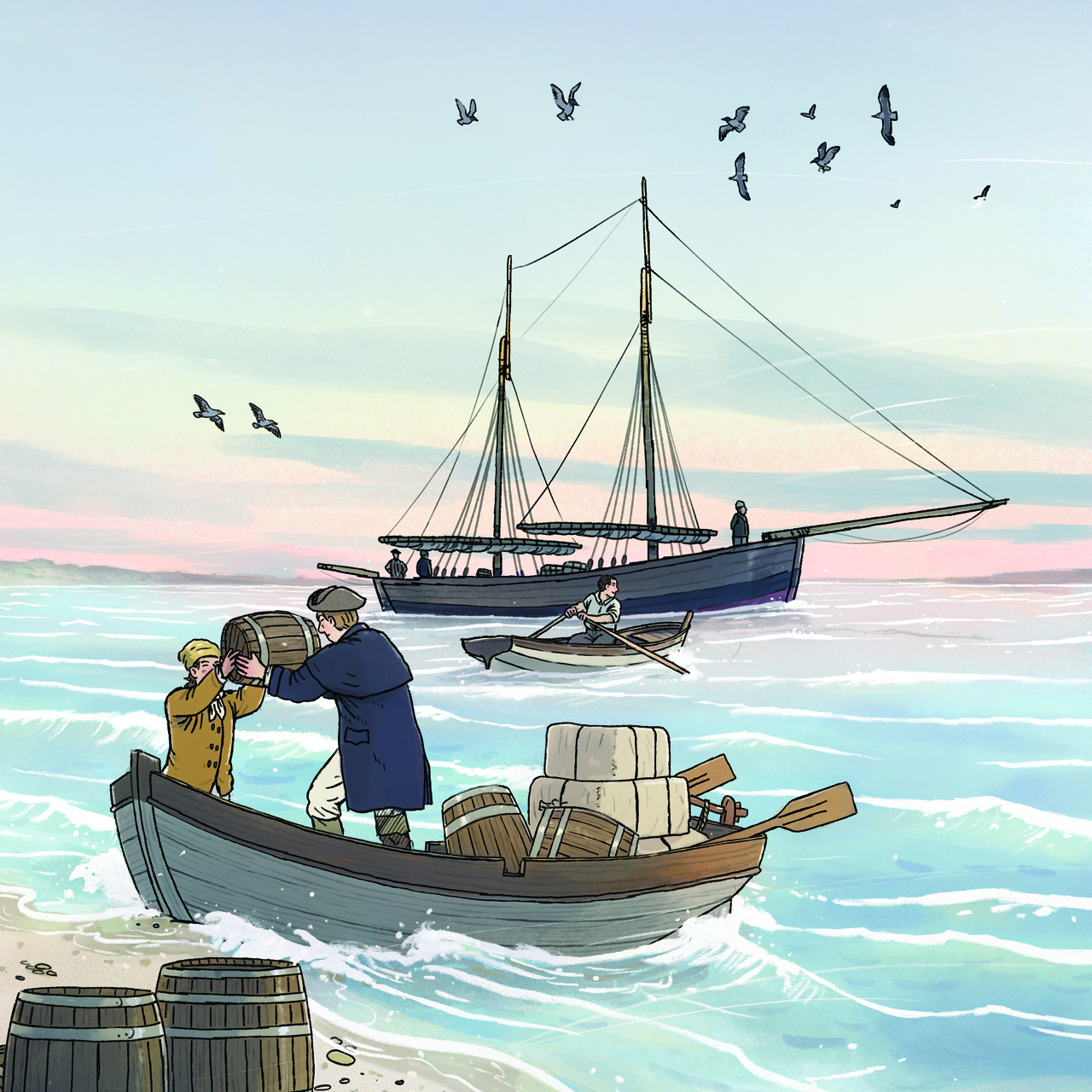
Stealing from the King?
The government has long imposed a tax on some goods imported into the country. This is called customs duty. Smuggling is the crime of bringing in goods without paying the duty.
Smuggled goods - called contraband - can clearly be sold at lower prices and return greater profits, which pleases both the buyer and seller.
For much of my life, Britain was engaged in costly wars with one country or another. To help pay for them the government increased the customs duty on goods such as tea, tobacco, silk, and liquors like rum and brandy.
I well remember when the customs duty more than doubled the price of tea, which made the smuggling of it highly profitable. Indeed, I suspect that well over half the tea being drunk had been smuggled.
Because smuggling seemed to harm no-one except the government it was accepted by nearly everyone - though a few asserted that it was worse than highway robbery because it was like stealing from the King.
It is not only fishermen and mariners who engage in smuggling. Farm labourers can earn a week’s wages in only a few hours by helping to convey the contraband inland after it has been unloaded on the coast. They too are considered to be smugglers.
In an attempt to prevent smuggling the government employed Revenue Officers to pursue smugglers both at sea and on land. They were assisted by local Riding Officers who patrolled the coast on horseback. However, those men were few in number and poorly paid, so they could usually be avoided, outnumbered, or bribed.
It might surprise you to learn that smuggling is rarely a hanging offence - smugglers are not pirates! However, being in an armed gang, wearing a mask, or attacking a Revenue Officer might well see a smuggler hanged.
Did you know?
In about 1724 Daniel Defoe, the famous author of ‘Robinson Crusoe’, observed that smuggling was the reigning commerce “from the mouth of the Thames to the Land’s End of Cornwall.”
You can listen to the audio track for this trail spot below, or read the audio transcript.