Breakfast at Sandhills
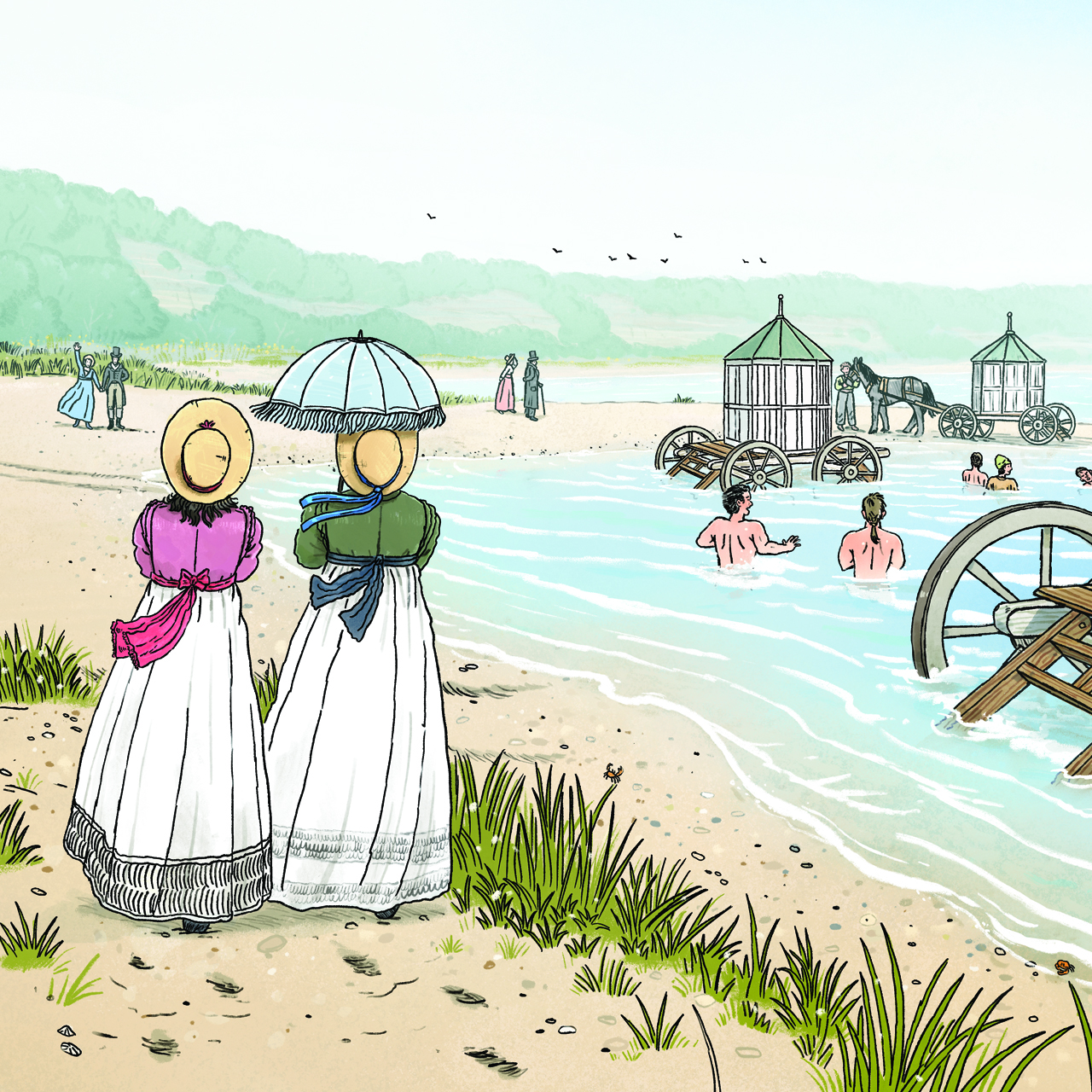
During my absence Mudeford continued to grow as a fashionable resort. Without doubt the most notable visitor was none other than King George III. In 1801 he and the royal family stayed a few days at George Rose’s house near Lyndhurst, then came early to Mudeford where they breakfasted at Sandhills before departing on the royal yachts for Weymouth.
For a while George Rose’s son William, a politician and amateur poet, lived in a large canvas tent pitched in the dunes to the east of Sandhills, but by the time of the King’s visit he had replaced it with a house he named Gundimore - though I believe that it had a circular room bedecked to resemble a Persian tent.
William’s literary guests to Gundimore included the celebrated Scottish author Walter Scott and the so called Lake Poets Samuel Taylor Coleridge and Robert Southey.
In 1811 Thomas Humby, the proprietor of the King’s Arms Hotel in Christchurch, took over and enlarged Haven House to accommodate the increasing number of visitors to Mudeford.
The war against Napoleon Bonaparte finally ended in 1815 with his defeat near the village of Waterloo in Belgium. Nevertheless, the customs duty remained high on many goods so smuggling continued, though I believe it had become a far riskier business than in my day.
The threat of a French invasion saw barracks built to the west of Christchurch and dragoons - mounted soldiers armed with muskets - can now be summoned to aid the Revenue Officers. In addition, the ranks of the Revenue Service have been swelled by sailors dismissed from the Royal Navy after the war.
Indeed, smuggling seems to have become more violent and the populace less acceptant of the trade. I suspect that the days of large cargoes of contraband being offloaded in broad daylight are over forever.
Did you know?
After the Napoleonic Wars ended the newly rebuilt Redford Bridge over the River Avon in Christchurch was renamed ‘Waterloo Bridge’ to commemorate the final victory of the war.
You can listen to the audio track for this trail spot below, or read the audio transcript.