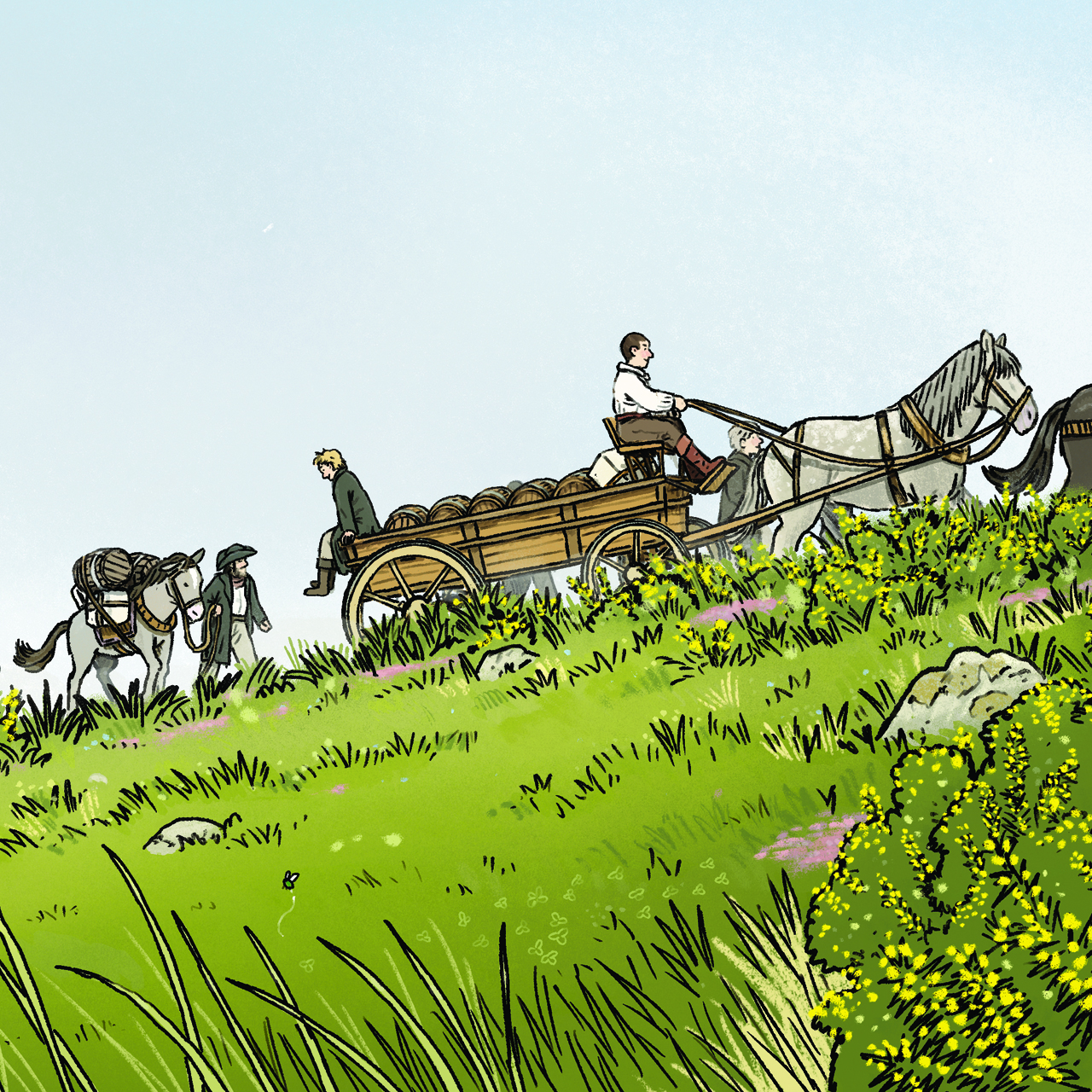
A gentle and business-like smuggler
It was once well known that boys could look out from the vantage of their schoolroom in St Michael’s Loft, which is high up in the Priory church, to see upwards of 20 wagons and hundreds of horsemen processing inland from Hengistbury Head in broad daylight.
I cannot be certain, but it is my suspicion that those men were under the command of the most renowned and successful smuggler in the area in the 1770s, one Isaac Gulliver, who was based on Bourne Heath and tended to work the coast west of Christchurch.
Gulliver was a giant of a man who, endowed with both brawn and brains, conducted his smuggling trade in a most business-like manner. Indeed, I believe he kept upwards of 40 men fully employed and had them attired in a livery of smock-frocks and powdered hair, which earned them the name White Wigs. He shrewdly invested his profits in property and other businesses, thereby becoming a very wealthy man.
In 1775 Britain went to war with its own colonists in America who, aggrieved by the taxes being imposed upon them, were seeking their independence. By 1782 the Royal Navy was facing a shortage of sailors. To meet that need King George III issued a proclamation that promised a pardon to any smuggler who volunteered to serve in the Navy, or provide substitutes to serve on their behalf. Gulliver took advantage of that offer and retired to the life of a respectable gentleman - though some say that he continued to smuggle wine.
One of Gulliver’s proudest boasts was that during his smuggling career no Revenue Officer had ever come to any harm. I admired him for that - but as you will learn, I was regrettably unable to match his boast.
Did you know?
Holy Trinity church in Christchurch is commonly known as the Priory because it was attached to a monastic priory until that was shut down on the orders of King Henry VIII in 1539.
You can listen to the audio track for this trail spot below, or read the audio transcript.