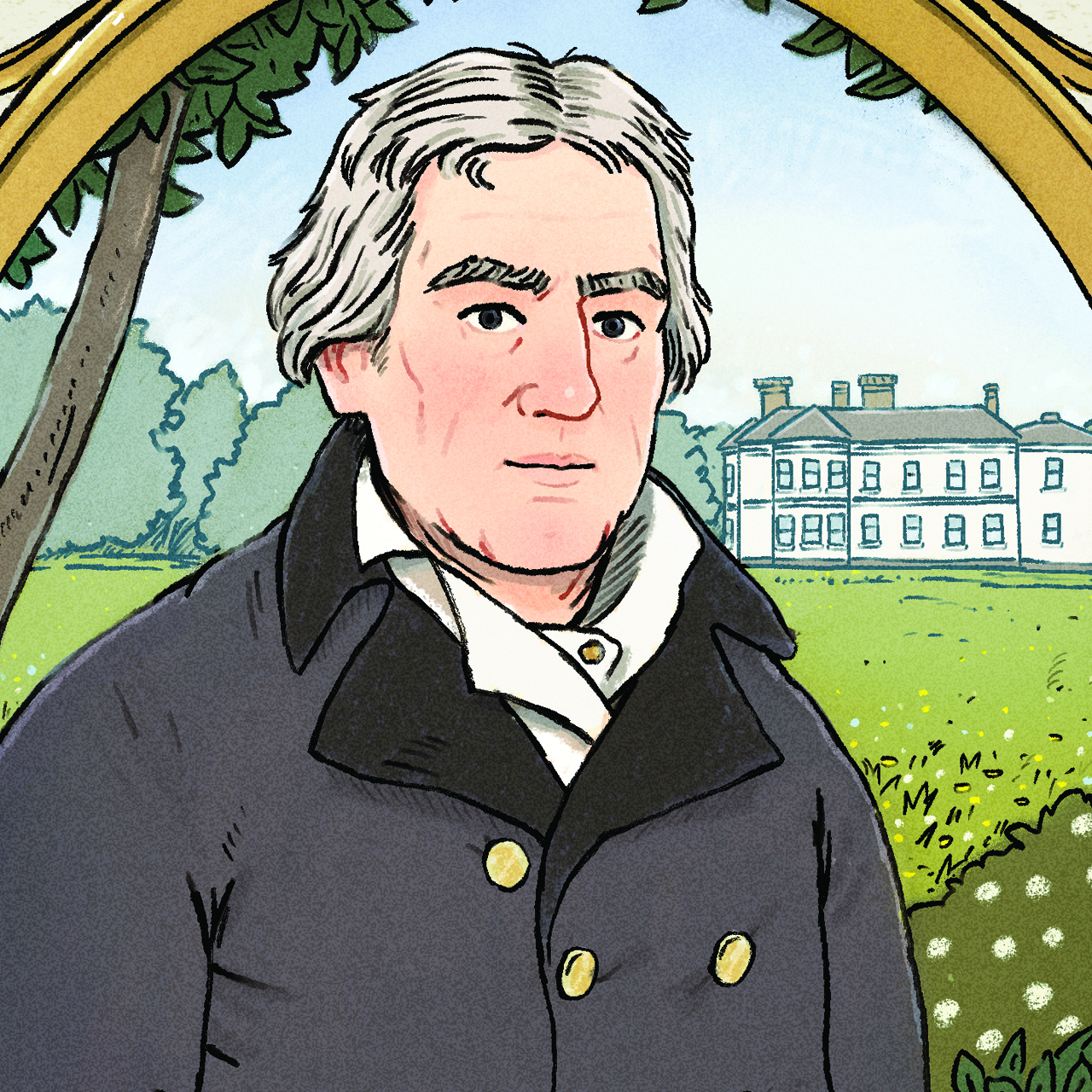
Sandhills and the King's Arms Hotel
The greatest change I saw on my secretive returns to Mudeford was the building of a grand house overlooking the sea a short distance from Haven House. Begun in about 1785 and named Sandhills, it became the summer retreat of senior politician Mr George Rose, Secretary to the Treasury in the government of Prime Minister Mr William Pitt.
Rose already possessed a house and estate in the Forest near Lyndhurst, so perhaps he desired his family and visitors to more easily indulge in the fashionable pursuit of sea bathing.
As Pitt’s chief financial advisor, Rose proposed a scheme to deter smuggling by the simple measure of reducing the customs duty on tea.
Within weeks of the affray at Mudeford the duty on tea was reduced by nine tenths to a mere 12½%. That made the smuggling of tea immediately unprofitable.
In 1793, after the revolutionary French Republic had executed their King and Queen with a machine called a guillotine, Britain and an alliance of European kingdoms went to war against France.
The following nine years of conflict discouraged the well to do from their traditional grand tours of Europe and they instead began visiting the scenic regions of Britain. By inviting his influential friends to Sandhills, with its good beach and views of Hengistbury Head and the Needle Rocks, Rose promoted Mudeford as a pleasant watering place.
Early in the new century, when he was one of the two Members of Parliament for Christchurch, Rose had the old King’s Arms Inn in the town rebuilt as a grand hotel to accommodate the growing number of refined visitors coming to the locality.
Did you know?
Robert Southey, one of William Rose’s literary guests at his seafront house Gundimore, became Poet Laureate in 1813 - and is credited with composing an early version of the story ‘Goldilocks and the Three Bears’.
You can listen to the audio track for this trail spot below, or read the audio transcript.