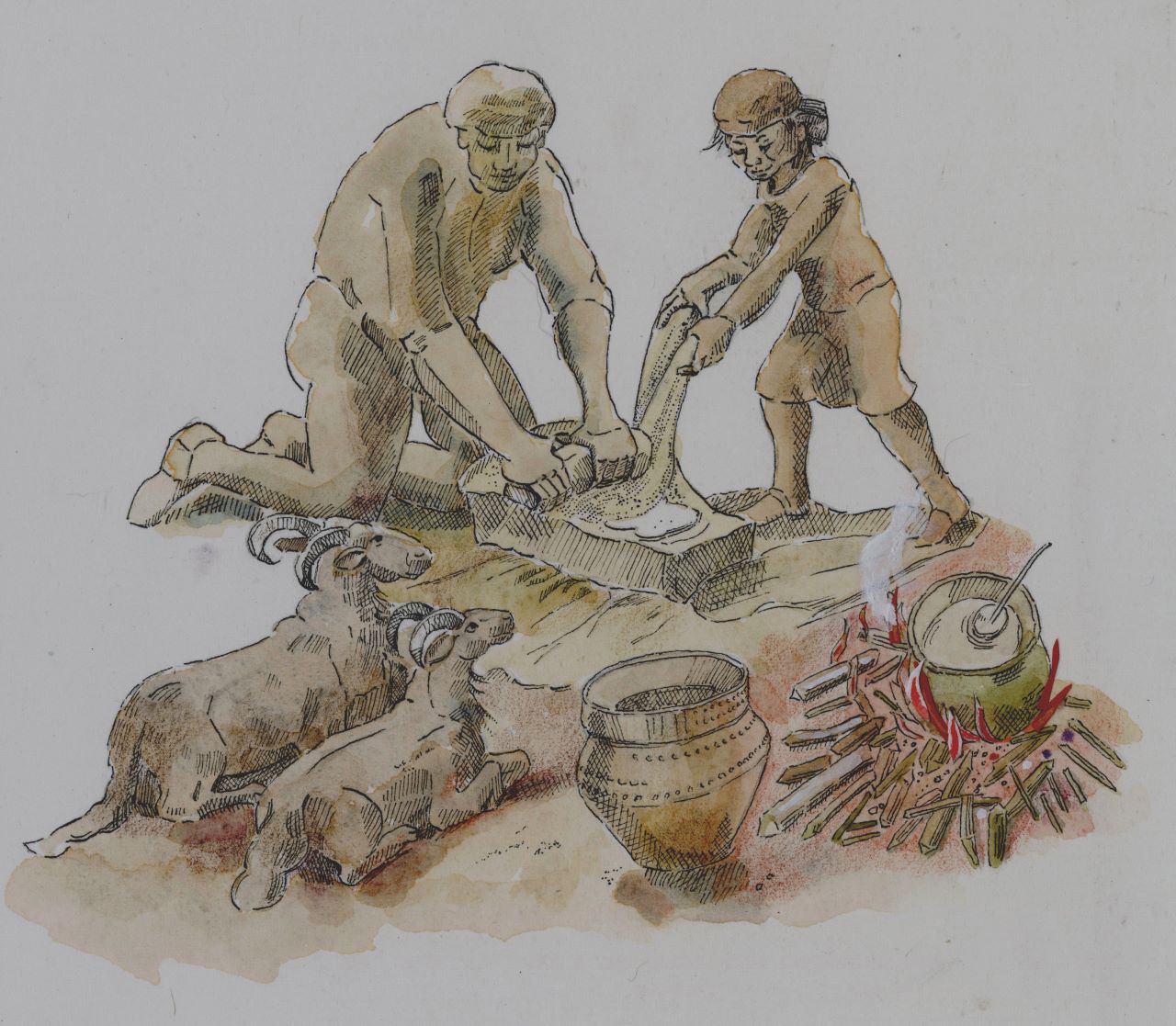
 Neolithic farmers kneading bread dough made from Emmer Wheat flour for their dinner.
As you explore, imagine those first farmers shaping the land, creating a lifestyle that still echoes through time.
Neolithic agriculture
Around 5,500 years ago, in the Neolithic era people at Hengistbury Head were part of a technological revolution, the beginning of agriculture. Britain was now a densely wooded landscape, isolated from mainland Europe due to rising sea levels.
Yet, amidst these changes, people on the elevated terrain around Hengistbury Head were pioneering the art of domesticating plants and animals. This feat would forever alter history at Hengistbury Head.
The new farmer's ancestors in the Mesolithic had been hunter-gatherers, meaning that they relied solely on herds of animals and the surrounding vegetation for the food and materials they needed to survive.
While people in the Neolithic still used stone tools made from flint like their Mesolithic ancestors, they started settling in one place and experimenting with different types of plants, specifically cereals.
Emmer wheat is one of the first species of cereals that people domesticated and grew in the Neolithic, allowing them to grind the wheat into flour using a saddle quern. Grains could be stored for later use or used to make bread, allowing people to stay in one place throughout the year. The foraging of wild plants such as hazelnuts and wild fruits supplemented farming in this way.
The Domestication of animals
The development of agriculture fundamentally shifted how human beings lived their lives in the wild, and soon, new technologies such as pottery and spun textiles were being developed.
This also grew to incorporate animal domestication, which allowed the first farmers to harvest milk, leading people to make cheese. They continued to hunt wild animals seasonally but started keeping herds of domesticated animals that they could rely on year-round.
It also changed how people on Hengistbury Head related to the landscape around them as they started to clear woodland to make fields for growing crops, and the herding of grazing animals required hedges or ditches to be dug.
From this point, ancient people at Hengistbury Head lived lifestyles more akin to how we live today than their hunter-gatherer ancestors.
How to get here
The postcode of this site is: BH6 4EW
Or you can use What3Words: ///rivers.tanks.index
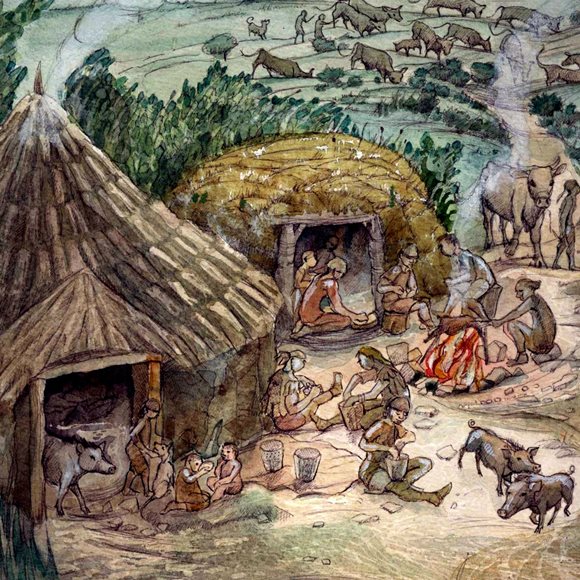 A Neolithic village at Hengistbury Head.