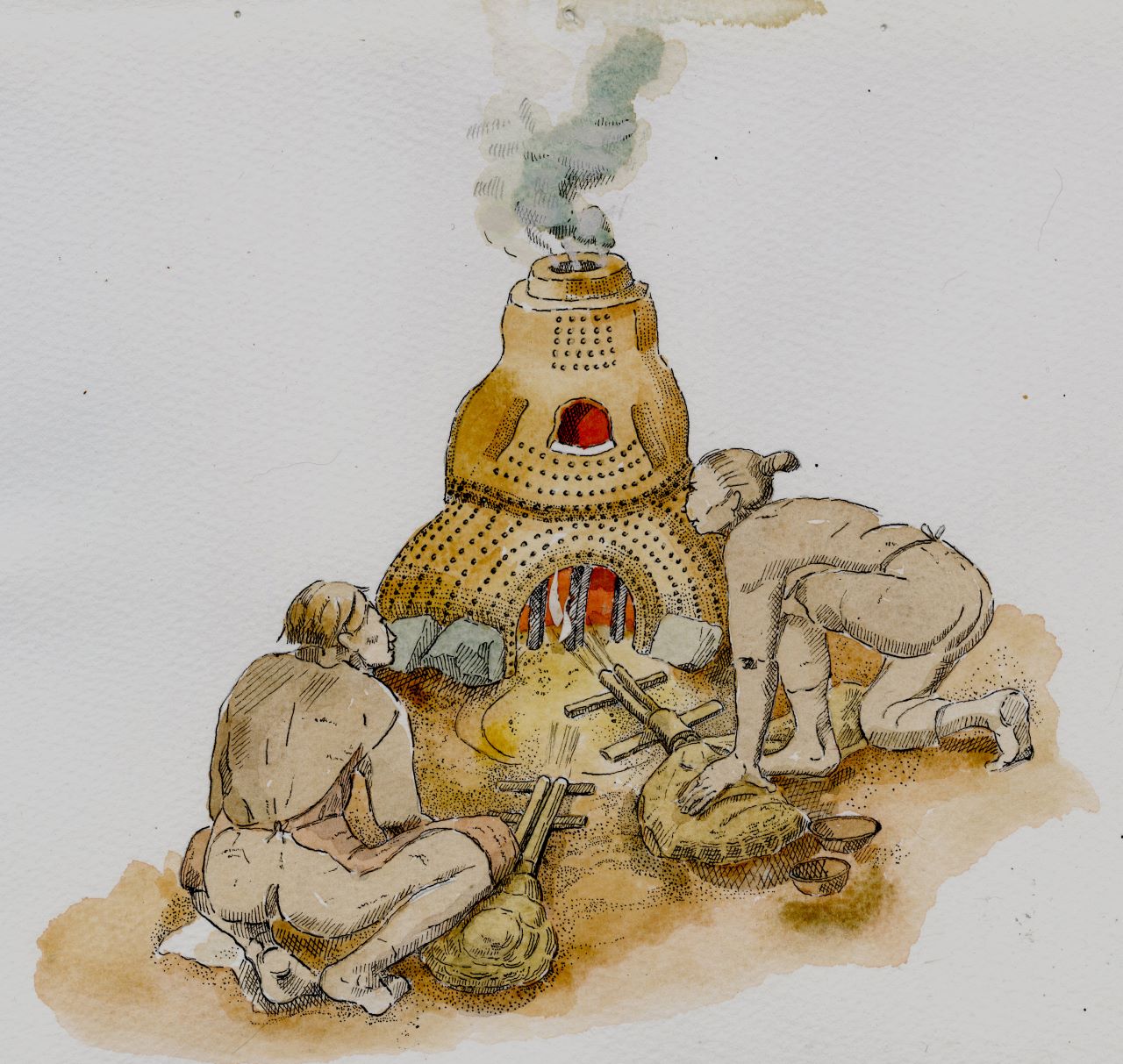
 Iron Age smelters extracting Iron from Iron ore using a clay furnace.
Imagine the lively trade and skilled craftsmanship that made this place so vibrant in the Iron Age.
An international Iron Age port
Around 2,150 years ago, the settlement at Hengistbury Head exploded into an international port of trade, one of the largest in Iron Age Britain.
An entire community thrived within double dykes, and the people at Hengistbury practised many new crafts. Never-before-seen goods such as wine, olive oil, fish sauce and glass were brought to the site by merchants and travellers from the continent and the Mediterranean. They were traded for local goods such as iron, cattle, pottery and likely slaves and hunting dogs.
The natural harbour at Hengistbury Head, fed by the Avon and Stour inland rivers, provided the perfect trading network connecting inland areas and a waystation for trips across the channel sea and along the English coast.
The people at Hengistbury Head were not only traders but also skilled artisans, continuing to innovate and diversify their crafts. They mastered the art of making and firing hand-built pottery, smelting and forging iron to create tools and implements, boiling salt from seawater, and turning wood and shale to make bangles and vessels using lathes.
In addition, Iron Age craftspeople also practised casting bronze, an alloy of copper and tin. Although used as a material for tools and weapons in the Bronze Age, Bronze in the Iron Age was used to make coins, brooches, belt buckles, rings, bangles and other objects of personal adornment that were important in displaying social status and identity.
How to get here
The postcode of this site is: BH6 4EW
Or you can use What3Words: ///kinds.seats.sands
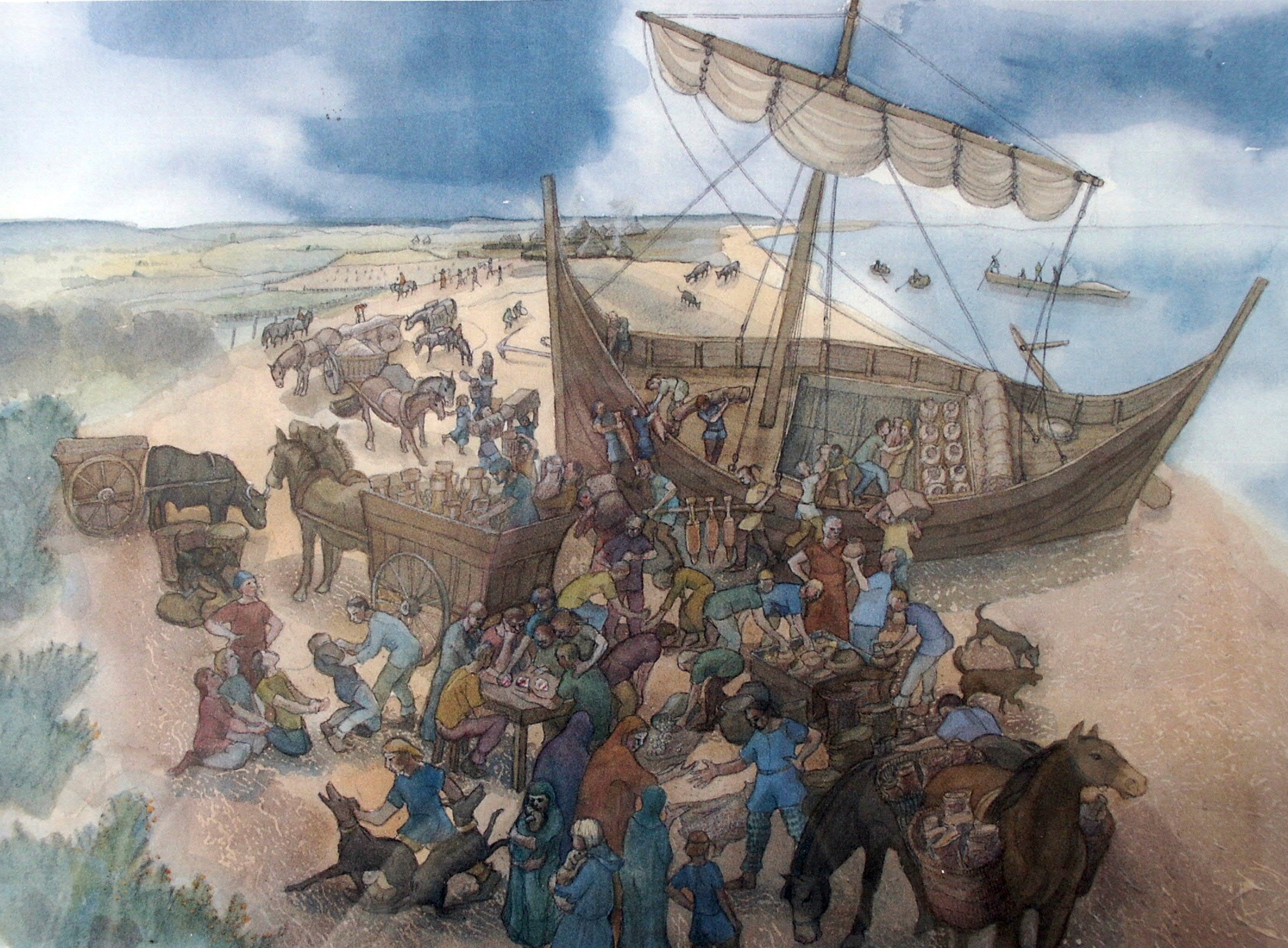 Hengistbury Head port during the Iron Age.